How to Run a Cashless Carnival and Stamp Rally in Singapore
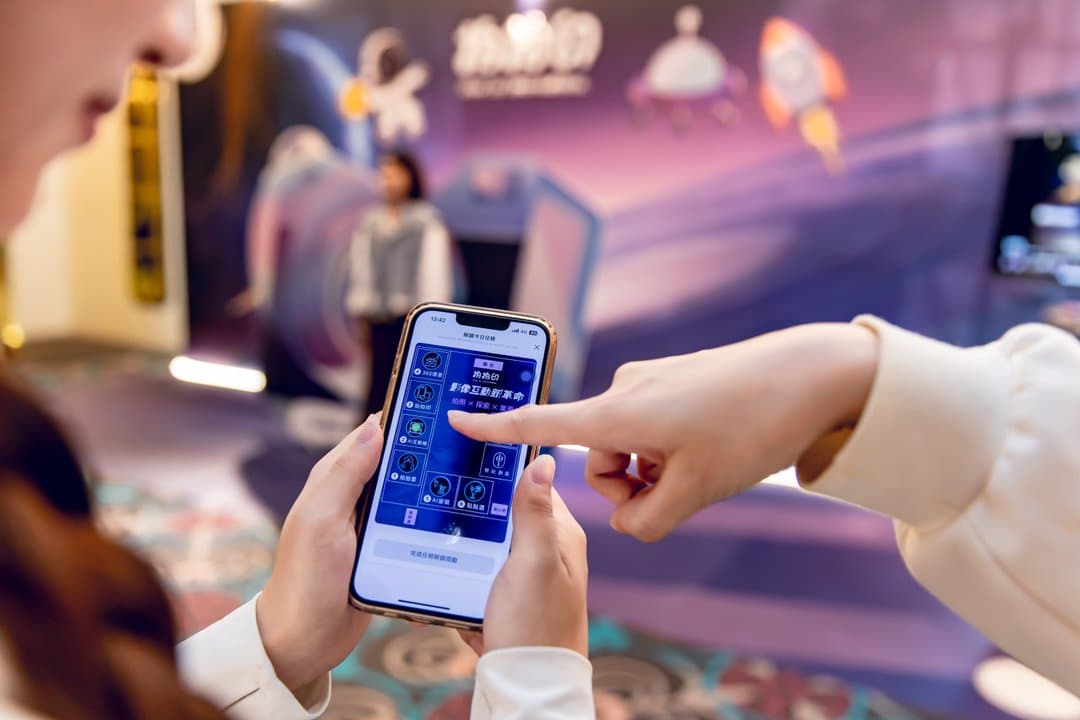
A cashless carnival in Singapore replaces coupons, tokens and cash at the booths with points in a wallet on each guest’s phone, and a digital stamp rally replaces the paper stamp card with a QR card on the same phone. Together they remove the three jobs that eat an organiser’s day: printing and handing out tokens, giving change and counting coupons at the end, and working out who actually visited which booth. This guide compares physical carnival tokens with QR points, walks through how the system runs for guests, vendors and the organiser, and lists what a corporate family day, roadshow or community carnival needs on the ground.
Carnival tokens vs QR points: the honest comparison
- Physical tokens or coupon booklets: must be printed, distributed at a queue, changed, collected and counted. They get lost (especially by children), they can be forged, and every booth settlement is a dispute waiting to happen. There is no data on what sold where.
- QR points in a phone wallet: the organiser issues points in bulk from the backend, guests receive them on entry, the vendor scans to deduct and sees the credit instantly, and the dashboard shows each booth’s takings live. No printing, no change, no counting, and settlement is a report export.
- RFID wristband tap: the phone-free option for kids and seniors — tap at each booth or checkpoint, with the same live data behind it. Often run alongside QR at family days.
- When tokens still make sense: a very small event with no phones in the crowd, or as a keepsake token that is not the actual payment method.
How a cashless carnival system works
The system has three sides. The organiser uses a desktop backend; each vendor logs in on a phone or tablet with its own account and payment QR; guests use a mobile web wallet or WhatsApp with no app and no sign-up. The flow on the day:
- 01The organiser sets the points per person — flat, or tiered by staff, family member and VIP — and guests receive them automatically when they scan the entry QR.
- 02At a booth, the guest scans the vendor’s QR, enters the points to pay and confirms. The vendor’s screen shows the credit immediately.
- 03When points run out, the service counter tops up: staff enter the amount and it lands in the wallet instantly. Self-funded top-up can be switched on or off.
- 04The backend tallies each booth’s total points, transaction count and peak periods live, and exports a report at the end for vendor settlement and finance.
Four point rules for four kinds of carnival
- Fixed allowance: every staff member and family member gets the same points, top-up allowed after — the standard corporate family day setting
- Tiered: staff, family and VIP receive different amounts, issued automatically from the imported list on entry
- Task-based: points or vouchers are released only after clearing checkpoints or completing the stamp card, tying spending to the game
- Top-up only: no points pre-issued; guests top up and spend — for public markets, mall roadshows and community events
Digital stamp rally in Singapore: how the QR stamp card runs
- 01Guests scan the QR at the entrance or any station and a personal digital stamp card opens in the phone browser — no app, no sign-up.
- 02They scan the QR plate at each booth or zone to collect a stamp; the card updates in real time and shows which stations are left.
- 03Completing the rule — a full card or a set number of tasks — automatically unlocks a redemption voucher or a lucky draw entry.
- 04They show the voucher at the counter to redeem once, or go into the closing draw pool.
The real value of a stamp rally is flow control, not the game. Put a checkpoint in the quiet corner and guests walk themselves there to complete the set; put one beside the main backdrop and the people who come to scan take a photo there too. A checkpoint is just a QR plate on a wall edge or booth corner — it takes no circulation space and needs nobody to staff it — so adding one means hanging another plate, and the number of stations is unlimited. Afterwards the dashboard shows the completion rate per station, which tells you which zones actually got visited.
When to use RFID wristbands instead of QR
If a large share of the crowd will not have a phone in hand — children, seniors, a run or a wet-play zone — put the stamp rally on RFID wristbands. Guests tap a reader at each checkpoint, redemption unlocks automatically after the set number of stages, and the lucky draw pulls only from guests who tapped in. Disposable bands are destroyed on removal so they cannot be shared, and the two methods can run at the same event.
How to plan it: a working timeline
- 01Four to six weeks out: confirm format, headcount, number of booths and the point rule (fixed, tiered, task-based or top-up only).
- 02Three weeks out: vendor list and accounts, stamp checkpoints and the completion rule, brand visuals for the wallet, map and stamp card.
- 03One to two weeks out: import the guest list if points are tiered; site recce for signal dead zones.
- 04Event day: a 15-minute vendor briefing, a printed QR standee at every booth, a service counter for top-ups and redemptions.
- 05After: export the per-booth report and settle with vendors from the same data finance uses.
What to prepare on site
- Each vendor: one phone or tablet logged into the vendor side, plus the printed payment QR standee
- Guests use their own mobile data; staff and the backend run on a separate 4G router
- Entry QR on signage at the gate and in the invitation or WhatsApp message
- A service counter for top-ups and voucher redemption, staffed throughout
- Stamp checkpoint plates hung at each station, including the zones you want people to discover
- Optional: a big screen for the closing lucky draw drawn from the stamp rally or check-in list
Common Singapore formats
- Corporate family day: fixed allowance per family, QR stamp rally across the activity zones, RFID bands for the kids’ zone, closing draw from guests present
- School carnival: class booths each get a vendor account and QR; students and parents receive points on entry; per-class totals export at the end with no coupon counting
- Mall roadshow or community carnival: top-up only mode, stamp rally to move footfall past every booth, lead capture through registration and surveys
- Brand carnival: task-based points — complete the stamp card to unlock vouchers — plus a photo zone at the busiest checkpoint
The cashless carnival and stamp rally modules can run standalone or together, and pricing is a custom quote based on headcount, number of booths and stations, whether check-in and a lucky draw are included, brand customisation and on-site support. WhatsApp us with your date, headcount and booth count and we will propose a module mix and a quote, usually within one business day.
FAQ
It is a points wallet on the guest’s phone that replaces tokens and coupons at carnival booths. The organiser issues points from a backend, guests pay by scanning the vendor’s QR and entering points, vendors see the credit instantly, and the dashboard shows each booth’s takings live for settlement.
No. Guests scan a QR code to open the wallet or stamp card in the phone browser, or use WhatsApp. There is no download and no sign-up, so seniors and children can use it themselves.
The backend records every transaction per booth. At the end the organiser exports the report showing each vendor’s total points and transaction count, and settles with vendors from that same data — no coupon counting.
Guests run on their own mobile data, and the vendor devices and backend use a separate 4G router. A site recce before the event checks for signal dead zones so booths can be placed or routers positioned accordingly.
There is no limit. A station is a QR plate, so you can add one per booth or zone, and the completion rule — a full card or a set number of tasks — decides when the voucher or lucky draw entry unlocks.
Yes. Each module runs standalone, or they combine into one flow: points issued at check-in, stamps unlocking vouchers, vouchers spent at booths. Wayfinding and lead capture can be added the same way.
MORE GUIDES
360 Photo Booth Singapore Price Guide: Video vs Photo, Space, Add-ons (2026)
What a 360 photo booth in Singapore costs in 2026 and what drives the price: the difference between a 360 video booth and a photo booth, how much floor space the platform needs, group capacity, and the add-ons (custom overlay, props, backdrop, extra hours) that change a 360 booth rental quote.
AI Photo Booth Singapore: What It Is, Price, and How to Choose (2026)
A practical guide to the AI photo booth in Singapore for 2026: what a generative AI photo booth actually does, the four modes (outfit swap, caricature, background swap, beauty), what AI photo booth rental costs, how it compares with a traditional booth, and how to plan one for a Dinner and Dance, launch or roadshow.
Best Interactive Games for a Dinner and Dance in Singapore
Interactive games for a Dinner and Dance (DND) in Singapore that scale to 200+ seated guests: big screen games, a live quiz, phone-shake races and retro arcade battles — join by QR, no app.
Tell us your event type, date and headcount
We’ll recommend a setup and a custom quote from real event experience.
Get a quote